Interview

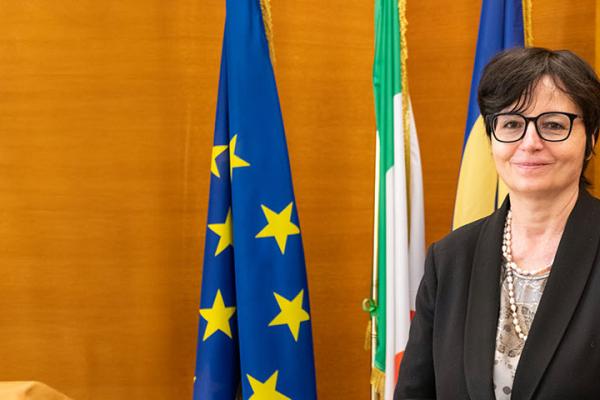
Professor Maria Chiara Carrozza is a robotics expert who leads Italy’s National Research Council. © Cnr
ICT  |  Industry  |  Science in society  |  Interview
From knee surgery to home drudgery, the robot revolution beckons

Automation will play a growing role in people’s lives and Europe has the know-how to lead the way, according to a top Italian researcher.
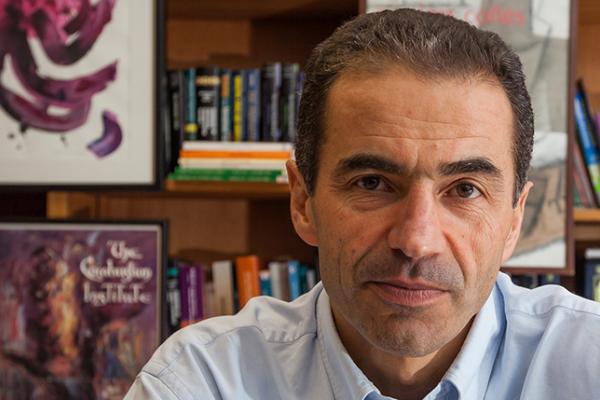
Professor Manuel Heitor chairs an expert group evaluating the EU research programme. © Manuel Heitor
Society’s challenges demand youth interest and funding in Europe, ex-research minister says

EU research, which has improved society and the economy for decades, now needs to engage more young people and attract extra public and private ...

As climate change accelerates, so too should the definition of prosperity. Image credit: CC0 via Unsplash
Once unthinkable, the prospect of society driven by wellbeing gains traction

As Europe embraces clean energy to fight climate change, a leading ecological economist argues for going beyond “green growth”.

Interview  |  Energy  |  Environment  |  Industry

Retrofitting Europe’s buildings for energy efficiency is not enough to slash the carbon footprint of the construction sector and cut emissions in time to meet the Paris climate agreement goals, according to Dr Catherine De Wolf, assistant professor of design and construction management at TU Delft in the Netherlands.

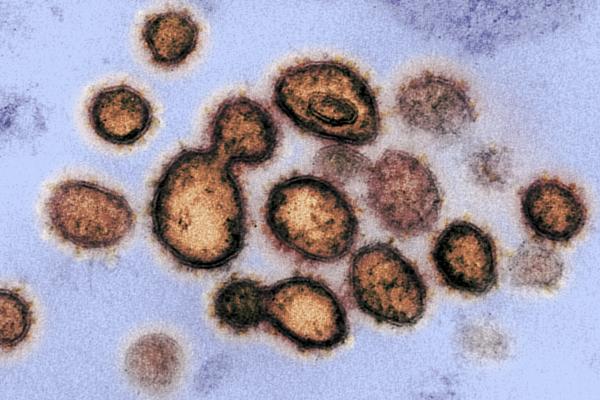
The virus that causes Covid-19 hijacks human cells by exploiting a doorway that is potentially also used by other deadly viruses such as HIV, dengue and Ebola, according to recent research that may help to explain why the coronavirus is so highly infectious to a wide range of organs in the body. 

Dr Yohei Yamauchi, a viral cell biologist at the University of Bristol, UK, who led the research, believes that the finding could not only lead to new drugs against Covid-19, but other anti-viral treatments that could be used to save patients lives in future pandemics. 

As the social isolation compelled by the pandemic swept many of us into a flurry of panic, grief and mental funk, a section of people actually reported improved levels of wellbeing, found biological psychologist Meike Bartels, a professor of genetics and wellbeing at VU Amsterdam, the Netherlands.

The Milky Way might be right on our cosmic doorstep, but a group of astronomers suspect that the way we currently study it is stunting our understanding. Professor Ralf Klessen at Heidelberg University in Germany is one of four researchers who have recently begun a six-year project, ECOGAL, to try something new: imagine our home galaxy as one huge galactic ecosystem.

Prof. Klessen believes that using this lens could answer fundamental questions about how stars and planets form, and how they shape the Milky Way’s future.

Live vaccines can give health effects beyond just protecting us from a specific disease and may even help us combat other infections such as Covid-19, according to Christine Stabell Benn, a professor in global health at the University of Southern Denmark.

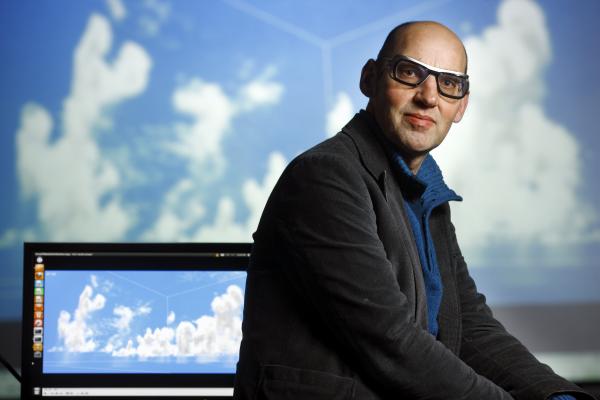
They might be beautiful at times, but clouds are still one of the biggest sources of uncertainty in understanding how the climate will change due to global warming, explains Professor Pier Siebesma, an atmospheric physicist at Delft University of Technology (TU Delft) in the Netherlands.

Interview  |  Policy

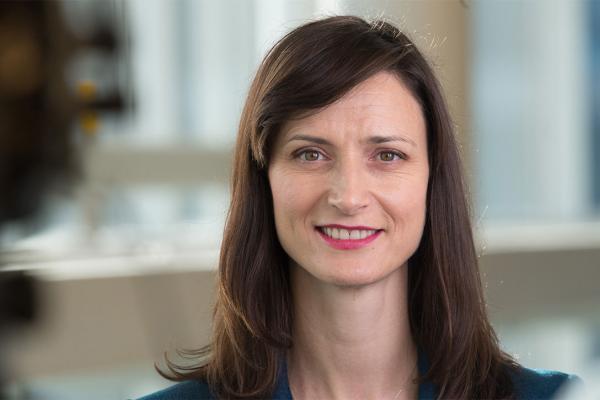
The only way for Europe to recover from the coronavirus crisis and build a better future is to work together and the pandemic has made that clearer than ever, according to EU Commissioner Mariya Gabriel. She told Horizon about the biggest impacts of the pandemic on research and innovation and her vision for where EU-funded research is headed.

Electronics made from carbon rather than silicon could lead to a new generation of medical devices, sensors and perhaps even robots, according to Professor Andreas Hirsch, chair of organic chemistry at Friedrich-Alexander-University Erlangen-Nürnberg in Germany.

Interview  |  Health

Recent advances are bringing cancer vaccines much closer to reality, giving patients another weapon in their arsenal of cancer treatments, according to Dr Madiha Derouazi, CEO of Amal Therapeutics and one of three winners of the 2020 EU Prize for Women Innovators.

More than six months into the coronavirus crisis, data show that not just age, but also biological sex plays a pivotal role in the manifestation and response to Covid-19, with more men dying from acute infections versus women in the short term. This discrepancy has shined a spotlight on a key theme that has gained traction in recent years: is enough being done to account for sex and gender in disease and medicine? Not enough, says Dr Sabine Oertelt-Prigione, the chair of sex and gender-sensitive medicine at Radboud University in the Netherlands and a member of the European Commission’s expert group on gendered innovations.