Research and Innovation

All success stories

Add to pdf basket
©ImageFlow #1060099625 | source: stock.adobe.com
From robots to chatbots, emerging technology can make public administrations more efficient and responsive. It is critical, however, that these innovations are adopted in ethical and trustworthy ways. To address this, the EU-funded ETAPAS project developed a framework to help the public sector handle the ethical, social and legal challenges of emerging technologies.
Add to pdf basket
©Yuparet #1048311233 | source: stock.adobe.com
European agri-food value chains are facing a series of challenges, from rising prices to climate change. The EU-funded CO-FRESH project developed new techniques, tools and insights to drive the fruit and vegetable industry towards greater sustainability. The results will ensure the food industry is better prepared for the future, benefiting producers and consumers.
Add to pdf basket
©mast3r #298799345 | source: stock.adobe.com
Gender-based violence is widespread, affecting approximately 30 % of women in Europe, according to the EU Fundamental Rights Agency. It is particularly prevalent in research institutions, where hierarchical structures can foster abuses of power. The EU-funded UniSAFE project was launched to tackle this violence in academia, which affects individuals of all genders – women, men and non-binary people.
Add to pdf basket
©Oleksandr #1133071815 | source: stock.adobe.com
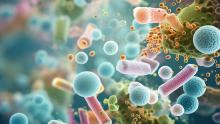
Analysing biological imagery such as microscope slides can be labour-intensive, especially as not all researchers know how best to automate this with AI. The EU-funded AI4LIFE project provides access to AI technologies, making models and AI-ready data sets open and accessible to everyone. This means researchers can spend more time interpreting data, accelerating scientific discovery.
Add to pdf basket
©Yellow Boat #1006130163 | source: stock.adobe.com
The shipping industry produces more than 1 billion tonnes of carbon dioxide each year, accounting for nearly 3 % of human-caused global emissions. By converting ships to run on renewable liquid fuels, the EU-funded FASTWATER project is showing how transport emissions can be cut, offering significant progress towards the EU’s climate goals.
Add to pdf basket
©Oleksiie #250520551 | source: stock.adobe.com
The EU-funded EU-India InnoCenter was launched to connect Europe’s cutting-edge tech businesses with India’s huge market potential. The initiative set out to spark innovation, smooth the path for European start-ups and strengthen the EU-India partnership. How? By creating a network where ideas flourish and lasting connections can be forged.
Add to pdf basket
©Pixel Pine #678511205 | source: stock.adobe.com
Science knows no borders. The EU-funded FunGlass project demonstrates how the expertise of top European partners can breathe new life into a young, aspiring institute. An upgrade of the Centre of Excellence for Ceramics, Glass and Silicate Materials in Trenčín, Slovakia, is delivering not only advanced science, but improved economic and social development in the region.
Add to pdf basket
©TTh  #968469849 | source: stock.adobe.com
Half of the world’s population lives in cities, and this figure is growing. Delivering water and sewage services in urban areas continues to be a significant challenge, especially in the face of climate change. Digital tools developed by the EU-funded DWC project are already being used to maintain Europe’s commitment to high-quality water infrastructure.
Add to pdf basket
©Matthieu #566340564 | source: stock.adobe.com
The thyroid gland produces many of the body’s essential hormones, but chemicals found in food, clothes and furniture can interfere with its function. Predicting the toxicity of these chemicals – especially at low doses – has proven difficult. The EU-funded SCREENED project created a model thyroid made of human cells to provide more accurate testing, as well as reduce reliance on animal studies.
Add to pdf basket
©European Commission 2024
The continuous rise of mobile communications has transformed how we work, live and play. But the power needed to deliver this growing data infrastructure has an equally large carbon footprint. Through 15 fellowships, the EU-funded GREENEDGE project aims to design energy-efficient technologies and combine them with the efficient management of ambient energy sources to reduce the impact of data services.