Add to pdf basket
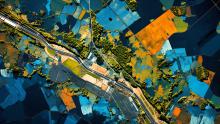
©NURA ALAM #644432670 | source: stock.adobe.com
Our cities are home to the vast majority of Europeans, but they are under pressure from the complexities of climate change and rapid urbanisation. The EU-funded CURE project leveraged the power of Earth Observation satellites to address these issues, aiming to create safer, more sustainable cities for EU citizens.
Add to pdf basket
©Tryfonov #404815811 | source: stock.adobe.com
Asteroids, comets and meteors are remnants of our cosmic past. Now, EU researchers have pioneered new analytical techniques that could help us better understand what they are made of. What’s more, this information could provide vital insights into the formation and evolution of our solar system.
Add to pdf basket
©vchalup #694745 source: stock.adobe.com 2023
Bursts of radio waves coming from outside our solar system have puzzled scientists since their discovery in 2007. By combining a radio telescope with machine learning software, the EU-funded MeerTRAP project was able to pinpoint the origin of these signals. As well as uncovering new celestial bodies, the system is helping physicists test their theories.
Add to pdf basket
©pongpinun #277453387 source: stock.adobe.com 2022
Most stars today can be found in giant, dead ellipticals which have long been considered by scientists the end of an evolutionary line for galaxies. How these galaxies formed and died so quickly has been an open question. The ConTExt project provides an explanation that is already paving the way to a new generation of astronomical studies.
Add to pdf basket
© sakkmesterke #289463455, source: stock.adobe.com 2021
Physicists have long wondered if the laws of quantum mechanics also apply to the ‘classical’ world. The EU-funded CAVITYQPD project has shown quantum entanglement between macroscale objects. Harnessing the quantum behaviour of everyday objects could propel citizens from the digital to the quantum age, facilitating our lives with vastly more sophisticated technologies.
Add to pdf basket
©ktsdesign #206627798, source: stock.adobe.com 2021
Earth Observation data is information about Earth’s physical, chemical and biological systems, often coming from satellites. The EU-funded openEO project developed a new interface to help users access, process and compare data from different providers. This is an important step towards allowing communication between platforms from different providers, benefiting researchers and citizens.
Add to pdf basket
© IncrediVFX, #338717700 source:stock.adobe.com 2020
What role - if any - do massive black holes play in the evolution of a galaxy? To find out, an EU-funded project used highly advanced X-ray telescopes to get a closer look at these mysterious celestial bodies. What they discovered greatly expands our understanding of the universe.
Add to pdf basket
© University of Surrey, REMOVEDEBRIS Consortium, 2017-2019
The intensification of human-driven activity in space over the past 60 years has led to a proliferation of debris orbiting the Earth. An EU-funded project is pioneering new technology that can clean up this problematic space junk.
Add to pdf basket
Add to pdf basket
© Thomas Bredenfeld #11779330, source: fotolia.com 2019
Pioneering EU-funded research on new solid-state batteries is paving the way for tiny yet powerful batteries for safer and better space applications. Industry partners are advancing with plans to commercialise the thin-film energy-storage technologies and processes at the heart of the project.