The EU-funded KIDS4ALLL project offers schools new ways to integrate migrant children. Eschewing traditional approaches, it focused on social and educational inclusion, helping students build confidence and connections in their new environment.
Many policies that aim to build up Europe’s resilience fail to consider the needs and challenges of families. The rEUsilience project saw this as a blind spot, as most people live within a family setting. That’s why the project is designing policies that ensure families have the resources and support they need to actively contribute to the European economy and society.
Eight years ago, conflicts in the Middle East drove migration across Europe to a level not seen since World War II. Decision makers at local, national and European level had to adapt quickly, and created a vast range of new tools and approaches to integrate refugees. The SPRING project enables decision makers to identify best practices from that era that can help them face the migration challenges of today.
Migrants and fragile communities often feel ostracised from the societies in which they live. The EU-funded MEMEX project helped communities at risk of sociocultural exclusion tell their stories through augmented reality. Similar projects could help social integration across Europe.
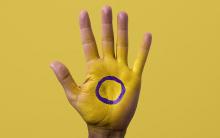
People born with sex characteristics that fail to fit into the typical definitions of male or female often face a lifetime of marginalisation, discrimination and social exclusion. They are also often subjected to potentially harmful surgical procedures. But new EU-funded research aims to change this by providing policymakers with fact-based information about the intersex experience.
EU-funded researchers have applied engineering know-how to understand what controls the mechanical strength of living cells. Their findings offer new insights into the spread of cancers as well as into diseases of the heart and nervous system.
Labour markets are changing dramatically, with millions now finding and carrying out work online. However, as official statistics only capture traditional labour markets, an EU-funded project has been tracking the growing world of online work.
Although being stuck in a brain scanner while being exposed to a horror film may not be everyone's idea of fun, monitoring volunteers' grey cells throughout this process can tell scientists a lot. EU-funded research using this and other memorable techniques has generated new knowledge on the way we process and transmit social information.
Employees can often have difficulty working with sophisticated machinery in modern factories. EU-funded researchers have now devised a control interface that can adapt to the experience and abilities of any operator.
Ocean research is a traditionally male-dominated field but the EU-funded project Baltic Gender has been inspiring change by helping scientists in five Baltic countries to better understand how a more gender-equal institute can benefit their work.