Add to pdf basket
© malp #498531479, 2025. Source: stock.adobe.com
Europe needs new clean energy sources to decarbonise its economy. The EU-funded NPHyCo project assessed the viability of using Europe’s nuclear power plants to generate hydrogen. The project found that the technique is technically feasible and could even be economically viable in the near future.
Add to pdf basket
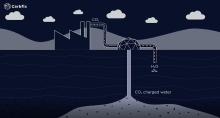
©carbfix.com
Reducing greenhouse gases in the atmosphere is a critical element in the fight against climate change. This is why EU researchers have pioneered a novel method of capturing emissions and storing them underground as rock. This could help Europe meet its climate targets.
Add to pdf basket
©Miha Creative #519515408 source: stock.adobe.com 2023
Essential services such as water, energy and transport are increasingly under pressure from climate change, cyberattack and their own growing complexity. The EU-funded KIOS Centre of Excellence, powered by young researchers, has been developing digital solutions that protect key services. The work will keep EU citizens safe while boosting the knowledge-based economy in Cyprus and beyond.
Add to pdf basket
©Kadiya #573910627 source: stock.adobe.com 2023
Despite their vulnerability to climate change, island nations rely heavily on imported fossil fuels. The EU-funded NEEMO project aimed to boost research into electric mobility in Malta. Such initiatives are helping to develop green transport solutions for EU citizens living on islands and beyond.
Add to pdf basket
©ChrisVanLennepPhoto #71123310 source: stock.adobe.com 2023
Next-generation renewable energy technologies can struggle to move from concept to the market. The EU-funded DTOceanPlus project developed a series of open-source software tools to reduce the risks and costs associated with ocean tech development. The tools are already giving a boost to developers across the sector, supporting the EU’s transition away from fossil fuels.
Add to pdf basket
© Project INTENT | https://www.intent.polimi.it
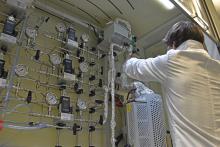
Catalytic reactions are crucial for energy conversion and the production of chemicals, but their operation is limited by slow heat transfer. The EU-funded INTENT project developed new reactor designs with improved potential for heat transfer. The research and results will help in the transition of Europe’s energy sector away from fossil fuels.
Add to pdf basket
©Sergey Peterman #12971206, source: stock.adobe.com 2022
When it comes to converting light into energy, nobody does it better than nature. By studying how this natural process works, a group of EU-funded researchers hope to create new methods and tools for replicating it in the lab. If they succeed, their work could open the door to building more energy-efficient electronic and photovoltaic devices.
Add to pdf basket
©Thinapob #356332578, source stock.adobe.com 2021
Today’s silicon-based solar cells are limited in that they can only absorb energy from a single band of light. That’s why the EU-funded PERTPV project is using perovskite-based materials to build a new type of solar cell. This should lead to more powerful, efficient and sustainable solar panels that will benefit citizens as much as the planet.
Add to pdf basket
© Okea #45901459, source: stock.adobe.com 2021
The diesel ferries used to transport people and vehicles from point A to point B produce a lot of air pollution. But a new all-electric, pollution-free car ferry designed by the EU-funded E-ferry project has proven capable of effectively replacing these diesel models. As a result, passengers across Europe could soon be commuting via sustainable, quiet, and smog-free electric ferries.
Add to pdf basket
©Enrique del Barrio #339282429, source: stock.adobe.com 2021
Heavy industry is often associated with giant chimneys releasing large quantities of dense, polluting smoke. The EU-funded CLEANKER project has developed new CO2 capture technology for cement plants, challenging this age-old industrial perception. Their technology will boost the EU’s plans for a greener economy that will ultimately benefit all citizens, wherever they live.