Add to pdf basket
©A_B_C #212116643 | source: stock.adobe.com
Air pollution is usually worse in urban centres, though residents are often less aware of its potential harm. The EU-funded CompAir project gave citizens the knowledge and tools needed to monitor and tackle air pollution – a solution that is particularly helpful for lower socio-economic groups throughout Europe.
Add to pdf basket
©ETEKINA Project | https://www.etekina.eu/
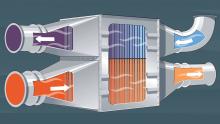
The industrial sector accounts for nearly a third of energy use in the EU, mostly for heat and thermal processes. Innovative technology developed by the EU-funded ETEKINA project recycles factory heat, lowering environmental impact and running costs. The research supports the EU’s goal of being climate-neutral by 2050.

Add to pdf basket
©Wanan | source: AdobeStock #685997520
Airborne pollutants are a threat to researchers and citizens alike. Using low-cost sensing technologies, the EU-funded VIDIS project hopes to deliver more accurate assessments of particulate matter exposure. Routine monitoring of air quality could offer significant health benefits for EU citizens.
Add to pdf basket
© Okea #45901459, source: stock.adobe.com 2021
The diesel ferries used to transport people and vehicles from point A to point B produce a lot of air pollution. But a new all-electric, pollution-free car ferry designed by the EU-funded E-ferry project has proven capable of effectively replacing these diesel models. As a result, passengers across Europe could soon be commuting via sustainable, quiet, and smog-free electric ferries.
Add to pdf basket
© iScape
Air pollution is a major risk factor for health in Europe. EU-funded research is helping to find innovative, inexpensive and green solutions for improving air quality, particularly in urban environments.
Add to pdf basket
Add to pdf basket
© stnazkul #84059942, source:stock.adobe.com 2020
Lightning strikes can cause substantial damage to buildings and critical infrastructure, such as airports. To mitigate this risk, one EU project is attempting to use powerful laser technology to control where lightning strikes. If successful, the resulting laser lightning rod could help save money - and lives.
Add to pdf basket
© Soonthorn - fotolia.com
EU-funded researchers have mapped out possible pathways to achieve the drastic technological, economic and societal transformations needed for the EU to become carbon neutral by 2050, meet its commitments under the Paris Agreement and lead global efforts to tackle climate change.
Add to pdf basket
Add to pdf basket
© Andrii IURLOV #19013550, source: fotolia.com 2019
An EU-funded project involving collaboration between top intelligent transport researchers has resulted in new developments in smart urban transport, support for emergency response vehicles and apps for smoother passenger transport across cities.